AstronomyJuly 1, 2025
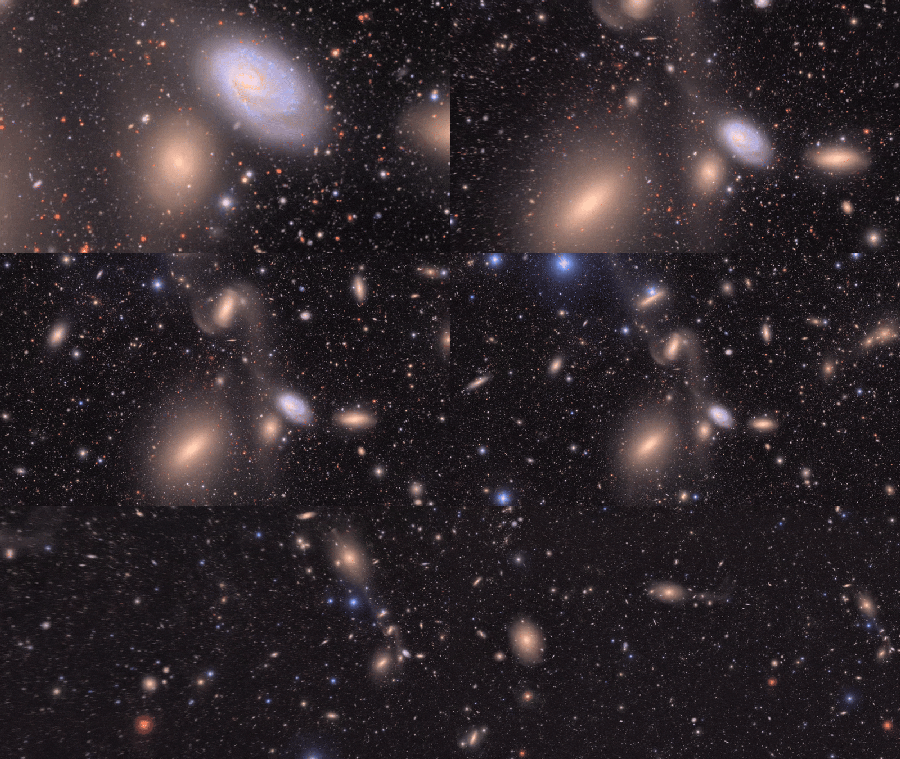
Astronomers Brace for 10 Million Alerts a Night from Rubin Observatory
Astronomers have never had this much data available this quickly before
Astronomers Brace for 10 Million Alerts a Night from Rubin Observatory
Astronomers have never had this much data available this quickly before

How a Passing Star Could Oust Planets from the Solar System
Close stellar encounters could change the structure of our planetary system, potentially dooming Earth or other worlds to oblivion

Read all the stories you want.
Dark Matter ‘Droplets’ Could Solve Multiple Cosmic Mysteries
Inspired by superconductivity, a strange new theory that seeks to explain dark matter might explain dark energy, too
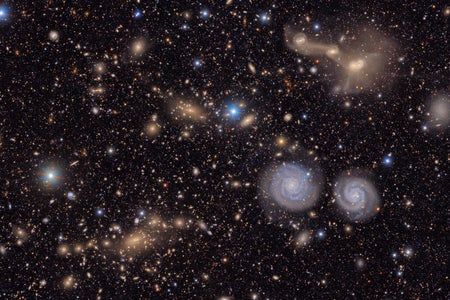
Majestic First Images from Rubin Observatory Show Universe in More Detail Than Ever Before
Astronomy fans can zoom in practically forever into the stunning first images from the Vera C. Rubin Observatory
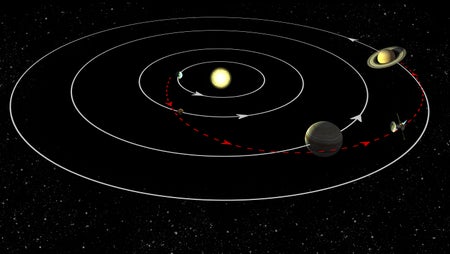
How Does a Gravitational Slingshot Work?
Spacecraft can get a significant boost by stealing energy from planets
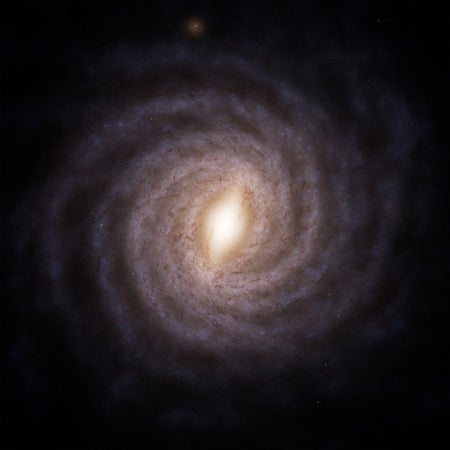
Gaia’s Long Goodbye
Gaia, Europe’s Milky Way–mapping spacecraft, shut down earlier this year. It was arguably the most important—and most overlooked—astronomy project of the 21st century
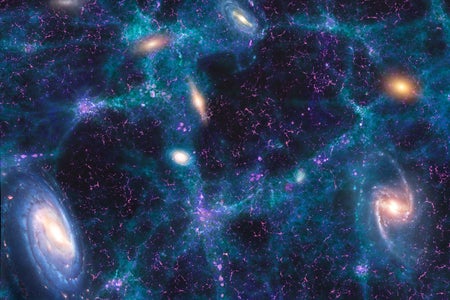
Scientists Find Universe’s Missing Matter in Intergalactic ‘Cosmic Fog’
Researchers have used cosmic explosions called fast radio bursts to illuminate the intergalactic medium
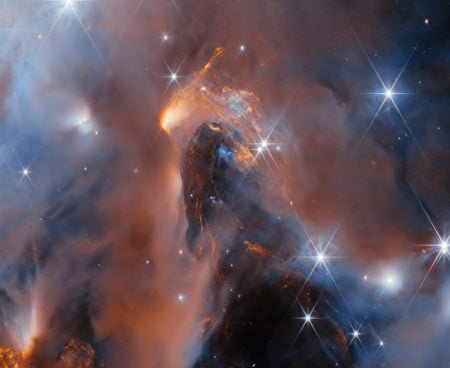
This New Map of Nearby Stars May Solve a Cosmic Mystery
A near-complete census of our interstellar neighborhood hopes to answer how stars, brown dwarfs and rogue planets form throughout the universe

White House Budget Plan Would Devastate U.S. Space Science
Scientists are rallying to reverse ruinous proposed cuts to both NASA and the National Science Foundation
![A team of astronomers combined data from NASA’s Chandra X-ray Observatory and the SKA [Square Kilometer Array] Pathfinder (ASKAP) radio telescope on Wajarri Country in Australia to study the antics of the discovered object, known as ASKAP J1832−0911 (ASKAP J1832 for short), located 15,000 light-years from Earth.](jpg/askap-j18327a2e.jpg?m=1748455653.661&w=450)
Astronomers Discover Mysterious Object Bursting with X-Rays
A celestial object some 15,000 light-years away is emitting bright flashes of radio and X-rays that scientists are struggling to explain
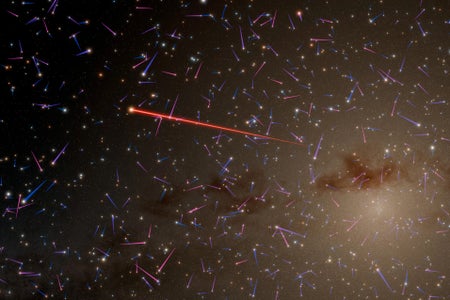
Hypervelocity Stars Hint at a Supermassive Black Hole Right Next Door
Some stars streaking through the Milky Way at millions of kilometers per hour probably trace back to a supermassive black hole in a neighboring galaxy
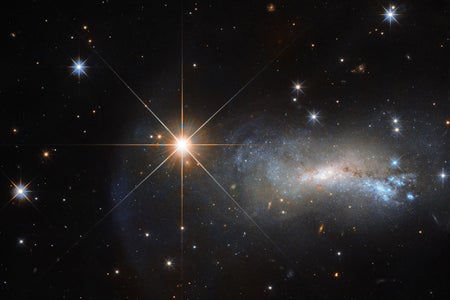
What Makes Stars Twinkle?
The quirks of light moving through gas are the cause of stellar twinkling, which can be a bane—and sometimes a boon—for astronomers